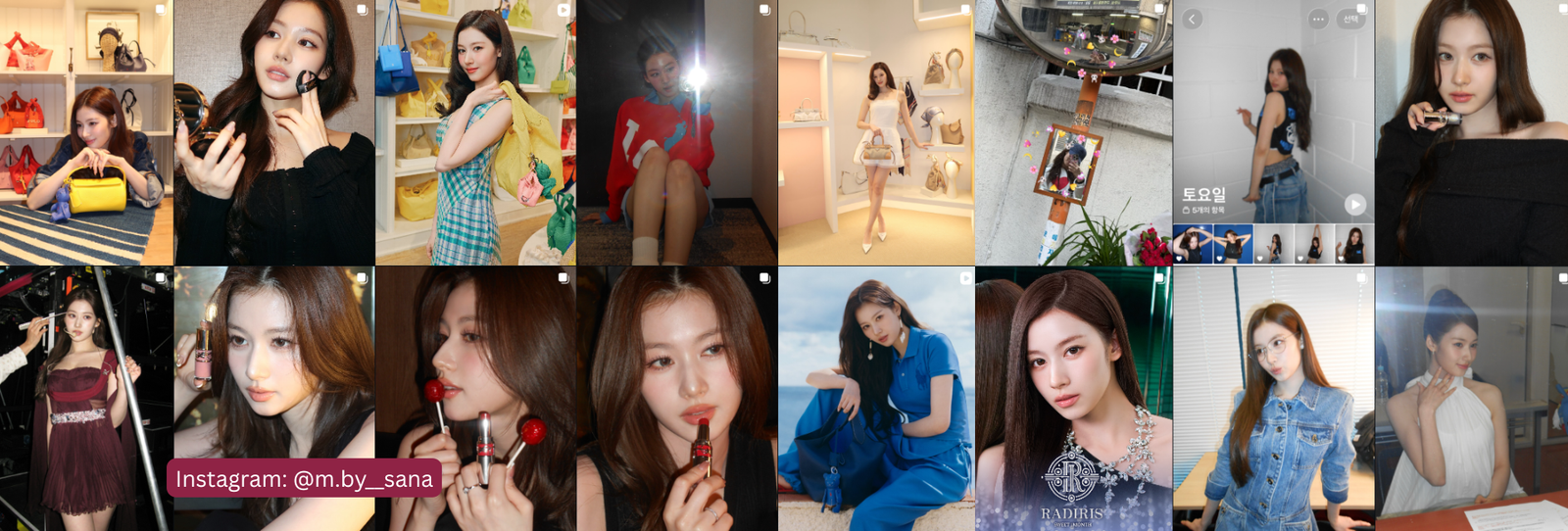
Sana’s whole aesthetic reputation is “soft glam” — blended, romantic, never harsh. That’s usually described as a styling choice, but it may also be a genuine reflection of her actual coloring. Multiple independent sources researching her natural undertone and hair-color history converge on the same broad family. That family is Summer — cool and muted.
The Verdict: Soft Summer
Sana is Japanese, from Osaka, and Japanese-language beauty coverage of her tends to use a simpler warm/cool framework rather than the full Korean 12-season system. But several independent sources agree she reads as “ブルベ夏,” blue-base Summer. Narrowing that down with the same soft, blended styling evidence, the best-supported specific read is Soft Summer. That’s a cool undertone, muted rather than vivid saturation, and a naturally soft, blended quality rather than sharp contrast.
The Evidence
Three separate Japanese beauty and fashion sources, working independently, cite consistent evidence. She reads best in dark or ash-toned hair rather than orange-warm tones. She’s frequently styled in cool pastel and rose-pink makeup, and photographs most naturally in “soft, blended” looks rather than crisp, graphic ones. That kind of independent convergence across unrelated editorial sources is more credible than any single site’s guess.
Worth Noting: The Subtype Is an Inference
To be upfront about the limits here: none of the sources we found commit to a specific 12-season subtype. Japanese personal-color content typically stops at “warm or cool,” not “which of the 12.” Soft Summer is our best-supported inference from the “soft, blended, muted” pattern that keeps coming up. It’s not a confirmed diagnosis. There’s also a Korean fan-community thread comparing cool-toned versus warm-toned makeup on Sana where the reaction leaned warm. That thread was about aesthetic preference rather than rigorous undertone testing, though, so we weight it as weaker evidence than the more methodical editorial coverage.
3 Looks That Would Nail the Season
- Dusty rose with soft ivory — cool, muted, and gentle.
- Sage green with soft taupe — quiet, blended warmth-free color.
- Mauve lip with powder gray-blue — soft and cool without any harsh edges.
Where It Would Read a Little Off
- Highly saturated, vivid color can overwhelm this season’s naturally soft, muted quality.
- Warm, orange-toned hair or makeup tends to work against a cool undertone.
- Stark black-and-white pairings can look harsher than her natural softness calls for.
The Soft Summer Palette
| Color | Hex | Why It Works |
|---|---|---|
| Dusty Rose | #C99BA0 | Cool and muted — a Soft Summer anchor tone |
| Sage Green | #9CAB93 | Quiet, blended warmth-free green |
| Soft Denim Blue | #7C97AC | Muted cool blue for everyday wear |
| Mauve | #B08497 | A soft, flattering lip and blush tone |
| Muted Lilac | #B4A7C6 | Gentle cool brightness |
| Soft Taupe | #B3A79C | A muted neutral that avoids starkness |
| Antique Rose | #C58A94 | Deeper muted warmth for a statement look |
| Powder Gray-Blue | #A0AEB8 | A cool, quiet neutral |
| Muted Plum | #8C6B7A | Soft depth without harshness |
| Soft Ivory | #EDE6DD | Replaces stark white with a gentler neutral |
See the complete Soft Summer color palette guide. Or, if you’re weighing this against a warmer soft season, our Soft seasons comparison breaks down exactly what to look for.
Frequently Asked Questions
Is Sana definitely Soft Summer?
The broad “cool, muted Summer” read is fairly well supported by independent Japanese sources. But the specific Soft Summer subtype is our best inference rather than a confirmed diagnosis — there’s no professional or broadcast classification to settle it precisely.
Why do some fans say warm tones suit her?
That reaction came from an aesthetic-preference thread comparing two specific makeup looks, not a rigorous undertone test. Preference and true undertone don’t always line up in casual comparisons.
Does being Japanese instead of Korean change the color-analysis method?
No — personal color analysis is about undertone and contrast, not nationality. It’s mentioned here only because Japanese-language sources use a slightly different framework — warm/cool only — than the full Korean 12-season system this site uses.
Want to find your own season with a guided process instead of guessing from photos? Start with our free personal color guide, or explore seasonal color tools.
Season classifications in this article are based on analysis of publicly available photos and video, and reflect our best-supported read where the evidence stops short of a confirmed diagnosis. They are educational estimates, not a substitute for an in-person or professional consultation.